
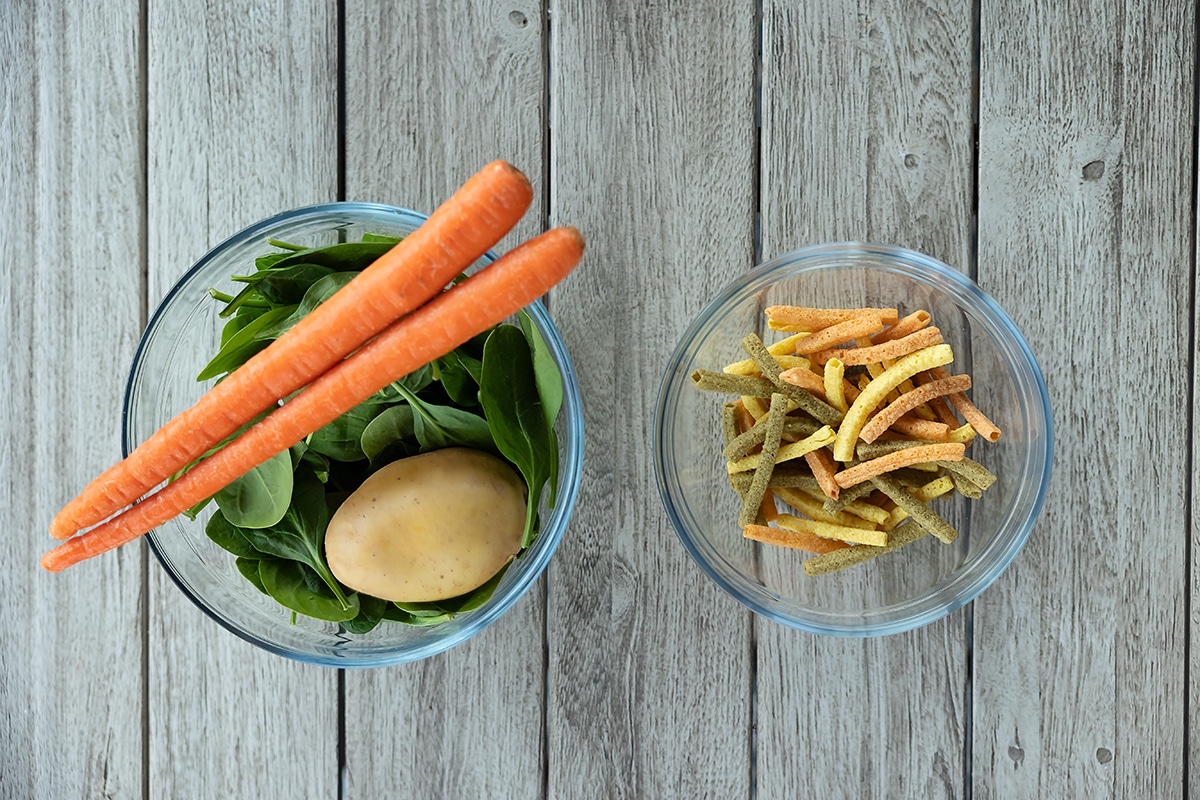
The internet is confusing in drawing the line between whole foods vs processed foods. One group perpetuates fear; think “health influencers” walking around the grocery store grabbing food packages of “poison”.
Also rising in popularity are “trad wives” (short for traditional wives). These influencers portray themselves eating mainly whole foods made from scratch often while wearing a floral prairie dress on a farm.
While the others, including many dietitians, worship at the altar of intuitive eating. This philosophy abandons all “diet rules” to listen to your body’s hunger and food cravings.
The most extreme intuitive eating champions make videos eating large servings of highly processed foods. To add shock value, they eat foods with artificial dyes linked to cancer to push back on labeling foods as “bad” or “unhealthy”.
Where do we draw the line between whole foods vs processed foods? Common sense is usually found in the middle.
This article discusses how to navigate “diet” messaging, defines whole foods vs processed foods, and provides strategies to help find a balanced approach to achieving optimal nutrition.
Keep on reading to put processed foods into perspective.
From Anti-Diet to Nourishment: Striking a Balance
It makes complete sense that the “anti-diet” approach of intuitive eating can be life saving in treating eating disorders. Currently, up to 6 percent of women and less than 1 percent of men have eating disorders (1).
Whereas, well over 50 percent of American adults have a chronic disease such as diabetes, heart disease, or cancer (2). Does the “anti-diet” approach work to combat the growing statistics of chronic disease?
The research is clear of linking poor eating habits to chronic disease. Yet, intuitive eating counselors often avoid discussing nutrient profiles of food as to avoid labeling a food “good” or “bad”.
People should be making informed choices when it comes to food. Also, it’s logical to question a philosophy of honoring all cravings when ultra-processed foods are chemically designed to make us addicted (3).
Can we trust our body’s cravings when overconsuming these addictive packaged foods?
On the other hand, not everyone can grow their own food and dedicate several hours a day to feeding their family. And it’s certainly not healthy to fear any one food.
The overall eating pattern should be emphasized rather than a single “bad” food. In today’s modern world, it’s unrealistic to completely avoid every level of processed foods.
The Food Spectrum: How Whole and Processed Foods Shape Your Health
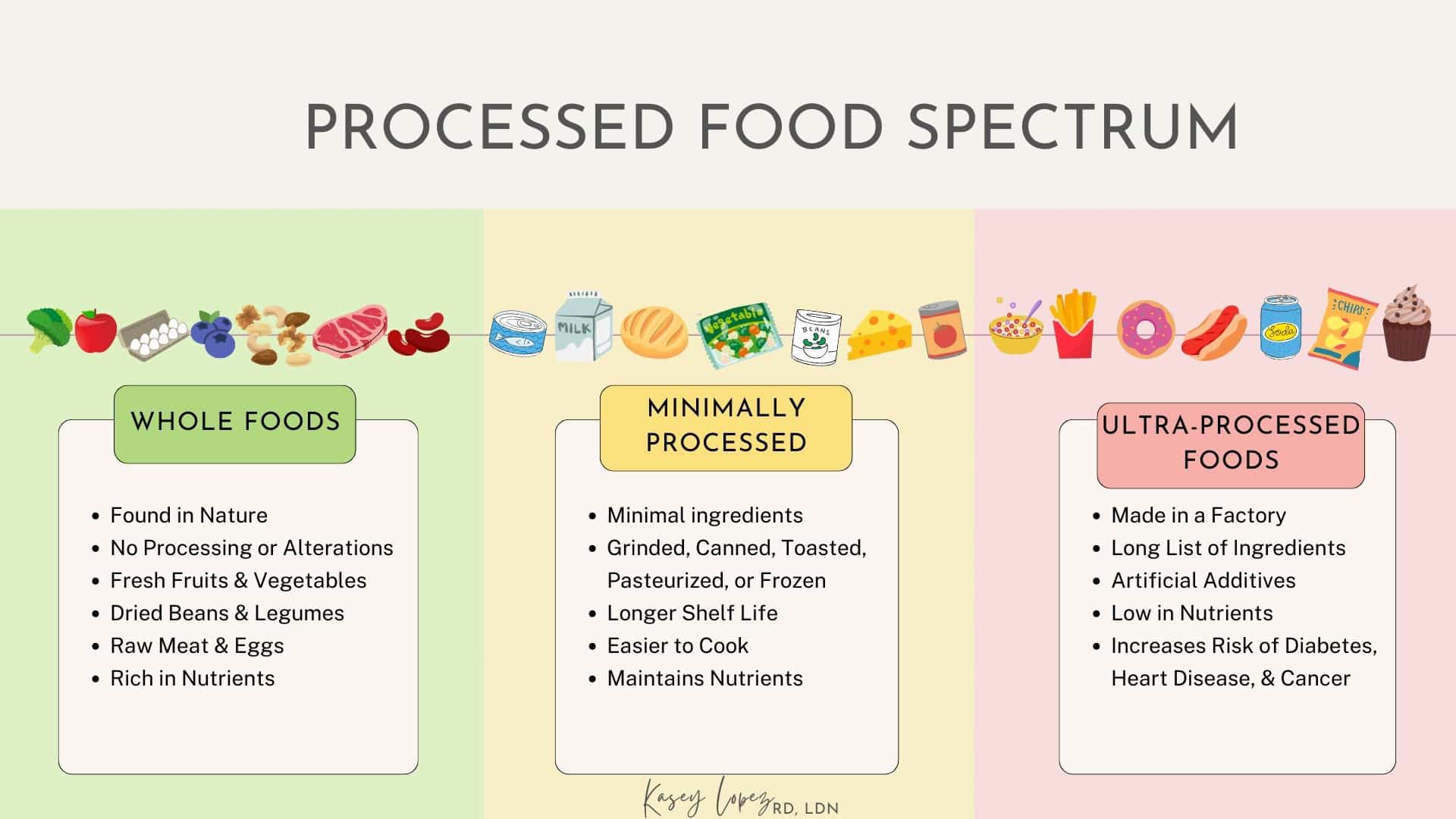
It is helpful to think of the level of food processing on a spectrum instead of strictly whole foods vs processed foods.
Whole Foods
Beginning the spectrum, whole foods are without any alteration from how the food is found in its natural state. Here, the foods are richer in nutrients like fiber, vitamins and minerals. Whole foods examples include:
- fresh fruit and vegetables
- raw nuts and seeds
- unprocessed beans and legumes
- fresh meats, fish, and eggs
- whole grains (brown rice, quinoa)
Minimally Processed Foods
Next, minimally processed foods are made by grinding, toasting, canning, freezing, or pasteurization. They do not have any part stripped away during processing. They have minimal ingredients with a longer shelf life.
Also, they maintain much of their original nutrient content and are regularly included in a nutritious diet plan. Examples of minimally processed foods include:
- canned beans and vegetables
- frozen or dried fruits and vegetables
- pasteurized milk
- plain yogurt
- roasted nuts
Ultra-Processed Foods
Ultra-processed foods are at the end of the spectrum. Increased intake of these foods increase risk of heart disease, cancer, depression, and diabetes (4).
Sadly, 60 percent of Americans’ diets are from ultra-processed foods (5). And the estimate is even higher in children.
In simple terms, ultra-processed foods are made in factories with long lists of hard to pronounce ingredients. It involves processes and additives that can not be made at home.
They usually contain many problematic ingredients such as added sugar, unhealthy fats, and artificial dyes while containing little protein, fiber, and micronutrients.
Ultra-processed foods are designed to be hyper palatable and convenient which often leads to increased intake of calories. Examples of ultra-processed foods include:
- soft drinks
- cookies
- sugary breakfast cereals
- chips
- hot dogs
- fast food
- frozen meals
How to Make Better Food Choices?
The choices you make at the grocery store will influence your family’s health. The most obvious and straightforward way to drastically reduce your family’s consumption of ultra-processed foods is to buy less.
Additionally, it’s helpful to find healthier alternatives to your family’s favorite ultra-processed foods. Personally, I buy organic versions of my family’s favorite packaged foods. I look for:
- short pronounceable ingredient list
- no artificial ingredients (artificial dyes, high fructose corn syrup, etc.)
- no potentially inflammatory oils (trans fat, canola oil, sunflower oil, etc.)
- low in added sugars
- sources of whole grains (fiber)
But it’s very important to not demonize foods. Your child being afraid to eat a piece of cake at a friend’s birthday party is NOT healthy. “All or nothing” mentality is not going to work.
It’s more healthy to occasionally enjoy and savor your favorite ultra-processed foods than to eat the treats with overwhelming feelings of stress.
I know it’s a challenge to eat more whole foods. Outside of cooking whole foods with meals, I keep fruit cleaned and prepped in grab and go jars. This helps my kids choose a whole food snack over a processed one.
My kids love fruit but are pickier with vegetables. Consistently offering vegetables at meals in a low pressure, positive way overtime really helps. Data shows it can take over 15 exposures for kids to accept a new food (6).
Additionally, cooking a variety of vegetables by getting out of your own “vegetable comfort zone” makes a difference in the long game of getting your family to eat more vegetables. You may discover new vegetables you love.
Check Out “Hack Your Health” Netflix Documentary
My family recently watched the Netflix documentary “Hack Your Health: The Secrets of Your Gut”. This film helped my kids understand the relationship that the food we eat has with our bodies using colorful and fun animations.
I must warn that it is rated TV-14. One of the women featured has a history of anorexia; so please be advised if you plan to watch with someone with an eating disorder or history of disordered eating.
After watching, our family did a fruit and vegetable challenge. Our goal was to meet Dr. Gupta’s recommendation of eating 20 to 30 different plant foods like fruits, vegetables, nuts, seeds, beans, and legumes per week.
We kept it positive and fun! If one of the kids took even just a bite, it counted. I kept a running list of all of the foods we each ate on my phone’s notes app.
I’m happy to report that we all met the challenge!
My son now eats purple cabbage, bell peppers, cashews, and pistachios! He is the pickiest eater of my two children and usually eats very few vegetables even with a dietitian for a mother. This was a huge win for us.
Family Fruit and Vegetable Challenge
Create your own ‘Family Fruit and Vegetable Challenge’. Keep track of everyone’s consumption. I recommend keeping it fun and light; it’s ok if they don’t love everything they try but it counts if they take at least a bite.
Get out of your comfort zone and plan to purchase some “new to you” or exotic fruits and vegetables. During our challenge, it was the first time all four of us have ever tried dragon fruit (reminded us of kiwis).
If everyone wins the challenge, celebrate with a family fun activity like a movie night, picnic at the park, or board game night.
Final Thoughts
Think of the level of food processing on a spectrum with a variety of foods that fit into healthy eating patterns instead of whole foods vs processed foods.
A healthy eating pattern may include minimally processed foods which last longer, save time in cooking, and maintain most of their nutrients.
Limiting ultra-processed foods decreases risk of chronic diseases. That effort begins with the purchases made at grocery stores and replacing your family’s favorite ultra-processed foods with less processed versions.
Overall, we should emphasize the overall eating pattern rather than hyper focusing and stressing about a single “bad” food.
Let me know if you try the “Family Fruit and Vegetable Challenge”. Your pickiest eater might even find a favorite vegetable! Tag me on Facebook or Instagram if you decide to share your family’s challenge on social media.
If you enjoyed “Kasey’s Digest”, please forward to a friend! In a later article, I will do a deep dive on helpful ways to source organic whole and minimally processed foods along with cost saving strategies.