
What Is Health?
Our traditional medical system is amazing for saving lives from acute injuries and illnesses like car accidents or appendicitis. However, the standard approach managing chronic disease paints a different picture. Chronic disease in the US continues to rise now affecting between 60% to 75% of American adults.
Poor nutrition and physical inactivity are among the leading causes to chronic disease. Yet, many people with chronic disease are prescribed medications to mask symptoms before attempting lifestyle interventions.
With the rising incident of chronic disease, we need to change the current approach to “treating” chronic diseases with medications as the first and often last line of defense. Many people don’t need a pill to mask a symptom of chronic disease. Instead, a lifestyle intervention can help address the root cause.
Chronic Disease Prevention and Management
Many chronic diseases (diabetes, irritable bowel syndrome, hypertension) can be reversible with lifestyle changes. According to research, our genetics account for only 5-10 percent of our disease risk. While environmental factors including lifestyle behaviors (diet, exercise, sleep, stress management) attribute to about 90 percent of our disease risk.
These findings give less weight to “diabetes runs in my family” for example and can help to empower people to take ownership of their health with their lifestyle choices. Good health can be available to everyone! We must begin at the basis of health which includes:
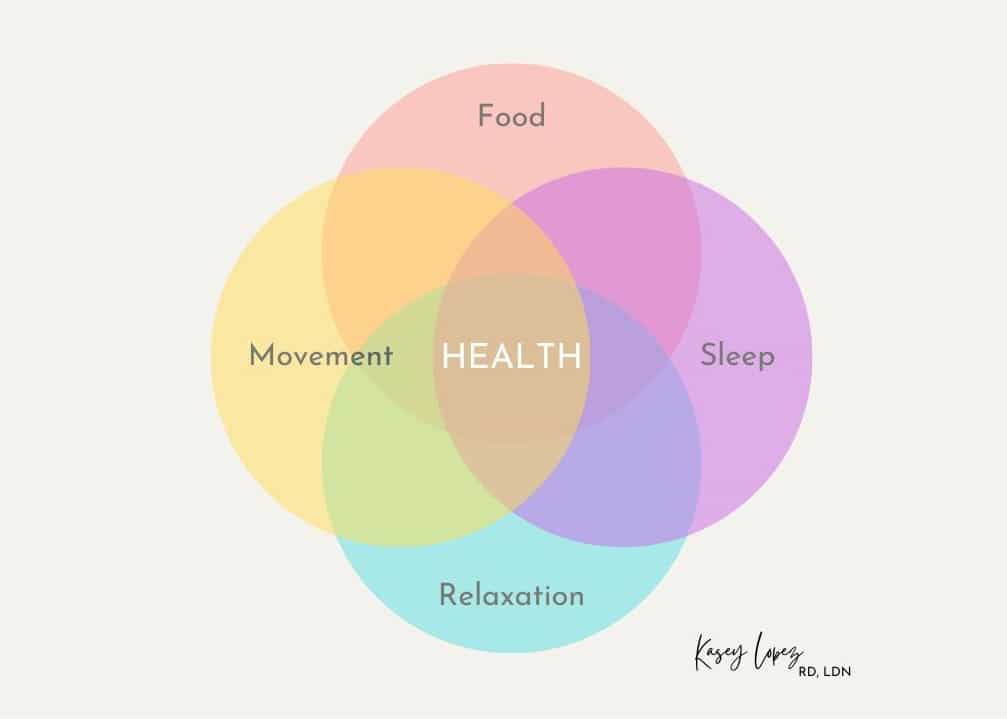
You need nutritious food, movement, adequate sleep, and minimal stress with relaxation for optimal health. Our body is a connected system; ignoring one part of your health will likely affect your ability to maintain the others.
Our modern world of “go, go, go”, “do, do, do” and “consume, consume, consume” is working against us. We do not have to accept this status quo; we can go against the grain to change our lives for the better!
Balancing It All
Personally, I feel my best when I eat high quality food, take movement breaks throughout the day, and put away the screens at night to prioritize 8 hours of sleep. It’s amazing the energy boost and mental clarity I get from taking a simple walk around the neighborhood.
We all know these days that scrolling on your phone too much often leads to stress, not relaxation. Speaking of relaxation… that’s my weakest spot.
I constantly have to remind myself to “clock out” of work which is sometimes difficult because I love what I do and the sense of accomplishment when I complete a project. Plus, my home office is just steps away. But I know when I don’t prioritize relaxation and I overwork, I am susceptible to burn out; it’s happened before and it’s hard to get out of the downward spiral.
Unlike sleep, relaxation happens while you are awake and is a powerful tool against stress. Relaxation methods look different for different people. Some people love to meditate while I prefer to soak in an Epsom salt bath or to drink a soothing cup of warm tea. I drink hot tea everyday, even in the blazing days of a Louisiana summer.
The goal is not perfection because that’s not really possible. Instead, we can look into our strengths, blind spots, and biases in noncritical ways to find a realistic path for change for our own lives. It will never be a one size fits all solution.
Different people have different challenges. It is empowering to build habits of health to feel our best. Which area of Food, Movement, Sleep, or Relaxation is the biggest roadblock to your health? Want to dig in deeper into the four pillars of health? Subscribe below to my newsletter for helpful strategies to build your optimal health!